
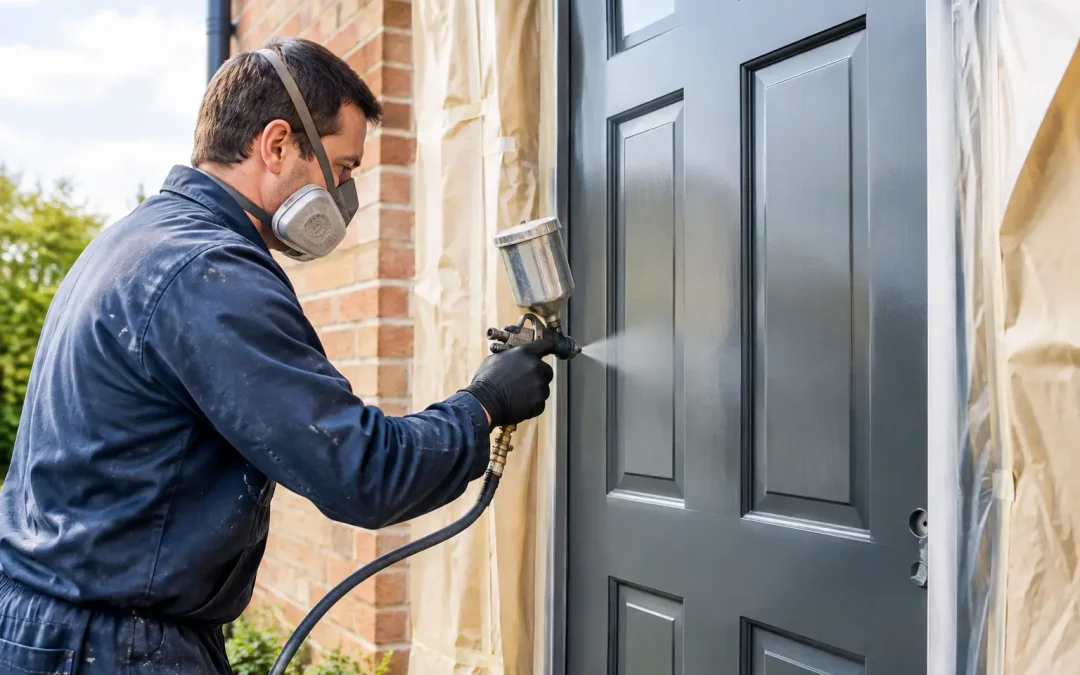
A tired door can make an otherwise well-kept room feel dated. Yellowing white paint, brush marks, chips around handles and a mismatch between doors and fresh walls are all common reasons homeowners consider door spray painting Milton Keynes services. Done properly, spraying can give internal doors, frames and fitted joinery a smooth, factory-style appearance without the cost and upheaval of replacement.
The key word is properly. A good result is not simply about applying paint quickly. It depends on careful preparation, the right coating for the surface, controlled spraying equipment and protecting the surrounding home or workplace from overspray. For many properties, it is a practical way to make existing doors look sharp, clean and current again.
What door spray painting can achieve
Spray application distributes paint in a fine, even mist, helping to avoid the brush strokes and roller texture often visible on doors. It is particularly effective on flat-panel and shaker-style internal doors, wardrobes, door frames, skirting boards and other timber details where a consistent finish matters.
The result can be a smooth satin, eggshell or matt finish, depending on the room and your preferred look. White remains a popular choice for brightening hallways and bedrooms, but there is no need to stay with standard white. Soft greys, deep greens, charcoal and muted neutrals can give a hallway or home office a more considered finish when chosen to work with the walls, flooring and fittings.
For landlords and property managers, spraying can also be a sensible maintenance option. Refreshing marked or dated doors can lift the impression of a property between tenancies or before marketing, while keeping disruption and replacement costs under control.
When door spray painting in Milton Keynes is the right choice
Spraying is often worthwhile when the doors are structurally sound but cosmetically worn. Solid timber doors, MDF doors in good condition and properly prepared previously painted surfaces can all be suitable. It is also a strong option when several doors, frames or built-in units need updating to the same colour and sheen.
It may be less suitable where doors have serious swelling from moisture, loose veneer, deep dents, failing laminate or damage that cannot be repaired cleanly. Paint improves a surface, but it cannot turn unstable or badly damaged material into a durable finish. In those cases, repair or replacement may offer better value over time.
The number of doors also affects the decision. One door can certainly be sprayed, especially where a precise finish is wanted. However, the time required to mask, prepare and set up equipment means spraying becomes especially cost-effective across a set of doors, frames and associated woodwork. A site visit and clear quotation should take account of the condition, quantity, access and finish required rather than offering a one-size-fits-all price.
Preparation is where the finish is won or lost
A flawless finish begins before any paint is sprayed. Doors need to be assessed for previous coatings, chips, cracks, grease around handles and signs of movement. Handles, hinges and other hardware may need removing or protecting, while gaps and small surface defects are filled and sanded.
The surface is then cleaned and abraded so the new coating has something sound to grip. Depending on the material and existing finish, a suitable primer may be required. This is particularly important on bare timber, MDF edges, stained doors and surfaces where adhesion is uncertain.
Masking is equally important. Professional spray work involves protecting adjacent walls, flooring, furniture, glazing and fittings with care. Doors may be sprayed in place where access and containment allow, or removed and finished separately where that will produce the best result. The right approach depends on the property, the number of doors and how much of the area needs decorating.
Rushing this stage creates the problems people associate with poor spraying: paint mist on nearby surfaces, rough edges, visible dust and premature peeling. Taking time to prepare properly keeps the work tidy and helps the finish last.
Spray painting versus brushes and rollers
Brush and roller painting still has its place. For a single door in a tight area, small repairs or a finish where a slight hand-painted texture is acceptable, it can be the most straightforward option. It also avoids some of the masking and equipment set-up associated with spraying.
But for doors and woodwork that need an exceptionally smooth, uniform appearance, spraying has a clear advantage. Paint is applied evenly across broad flat areas, recessed panels and detailed edges. This can reduce application time on larger projects and helps create a consistent look across multiple doors.
There are trade-offs. Spraying requires thorough protection of the work area and controlled conditions. Fresh coatings also need adequate drying and curing time before doors receive daily knocks, closing pressure and cleaning. A professional decorator will explain how rooms can be used during the work and when the finish should be treated with extra care.
Choosing the right colour and sheen
Colour changes the character of a door more than many people expect. Crisp white doors work well with most schemes and reflect light in narrower halls. A warm off-white can feel softer in period homes, while a dark colour can define a doorway and make pale walls feel more intentional.
Sheen matters just as much. Matt finishes are understated but can show scuffs in busy family areas. Satin offers a subtle sheen and is often a practical choice for internal doors because it balances appearance with cleanability. Higher-sheen finishes reflect more light and can be hard-wearing, but they reveal imperfections more readily if the underlying surface has not been prepared well.
For commercial premises, the best choice often comes down to footfall and cleaning requirements. A durable, wipeable coating in a sensible sheen can help doors in offices, communal areas and managed properties stand up to regular use without looking overly glossy.
Keeping disruption to a minimum
Most people are less concerned about the paint itself than the impact on everyday life. Doors are used constantly, particularly in busy homes, offices and rental properties. Good planning makes a real difference.
Before work begins, agree which rooms need access, whether doors can be taken down in stages and where belongings should be moved. A decorator should protect floors and nearby surfaces, maintain a tidy work area and schedule the job so that essential rooms are not unnecessarily out of use. If a whole house is being refreshed, door spraying can be coordinated with wall, ceiling and woodwork painting to avoid repeating preparation work.
Ventilation, drying conditions and product selection also matter. Trade-grade coatings and suitable application equipment help produce a durable finish, but they must be used with the space and occupants in mind. This is especially relevant where children, pets, staff or customers are nearby.
What affects the cost?
The cost of door spraying is usually driven by the number and type of doors, their condition, the level of repair needed, whether frames and skirting are included, the chosen paint system and site access. A simple run of smooth internal doors in good order will need less preparation than stained doors with damaged edges, old varnish and multiple layers of failing paint.
It is worth looking beyond the headline price. A low quote that skips cleaning, sanding, primer or proper masking can lead to poor adhesion and an uneven result. A detailed quotation should explain the preparation included, the areas being sprayed, the finish selected and any exclusions. That gives you a realistic basis for comparing options.
Replacement doors may appear attractive at first, but the wider cost can include buying new doors, handles, hinges, fitting, disposal and decorating around changed frames. If existing doors are sound, a professional sprayed finish can deliver a major visual improvement for less disruption.
A finish that earns its place
Door spray painting is not a shortcut when it is carried out with disciplined preparation and the right materials. It is a finishing method that can make well-used doors look cleaner, smoother and better suited to the rest of the property.
RS Interiors MK brings more than 15 years of local decorating experience to projects ranging from a few internal doors to full property refurbishments. The aim is straightforward: careful protection, precise application and a finish that looks right long after the equipment has been packed away. If your doors are sound but no longer doing the room justice, a free, no-obligation quote is a sensible first step toward deciding whether spraying is the right route.
Recent Comments