
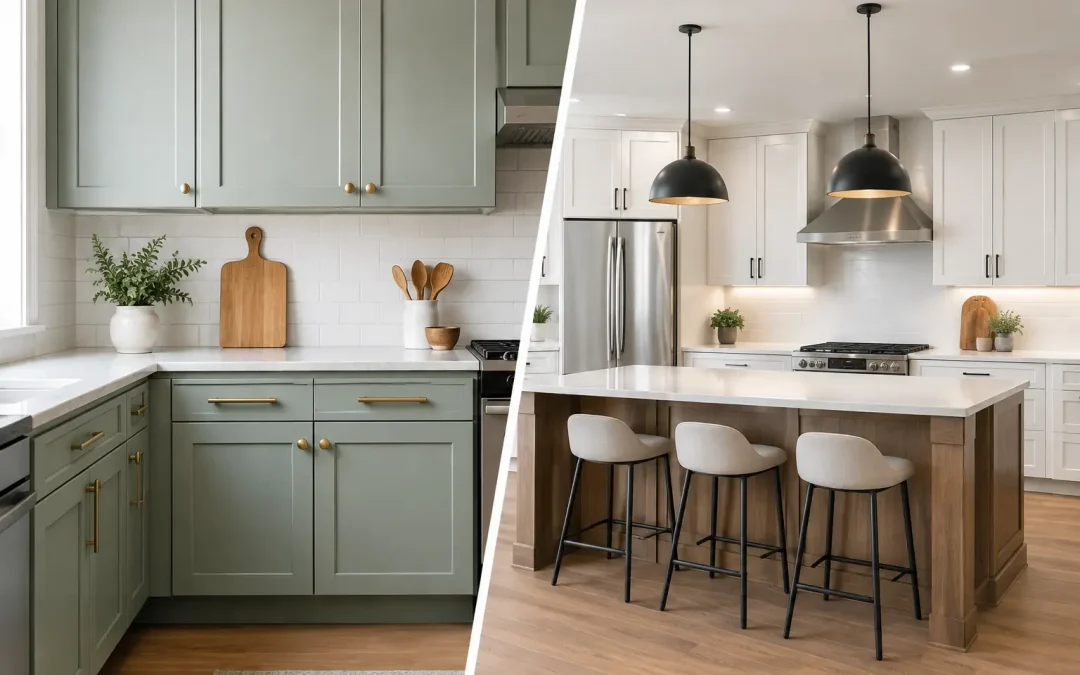
A dated kitchen can make an otherwise well-kept home feel tired, but that does not automatically mean every cupboard needs removing. When deciding between painted cabinets or replacement kitchens, the best choice usually comes down to the condition of what is already there, how you use the room and where you want to invest your budget.
For many homeowners, a professionally painted kitchen offers the visible change they want without the cost, mess and weeks of disruption that can come with a full refit. In other cases, particularly where units are damaged, poorly laid out or no longer fit for purpose, replacement is the more sensible long-term decision. The key is to assess the kitchen honestly before choosing either route.
When painted cabinets make the most sense
Kitchen cabinet painting is a strong option when the carcasses are solid, the doors work properly and the existing layout suits your household. Well-built cabinets can last for many years, even if their finish belongs to a different decade. Oak, maple, MDF and many laminate or previously painted doors can often be prepared and refinished to give the kitchen a completely different character.
A change from dark timber to a soft off-white, warm grey, sage green or deep blue can alter the whole feel of the room. It can make a compact kitchen seem brighter, help an open-plan space feel more considered, or bring an older property up to date without stripping out useful storage.
The main saving is not just the cost of new cabinets. You may avoid removing worktops, disconnecting appliances, replastering walls, replacing flooring and dealing with the knock-on jobs that a kitchen refit often reveals. If your worktop, tiles and appliances are in good order, painting the cabinets can be a practical way to improve the room while keeping the project focused.
It is also a useful choice for landlords preparing a property between tenancies, homeowners getting ready to sell, or people who have recently moved in and want to live with the existing layout before committing to a larger renovation. A quality makeover buys time without looking like a temporary fix.
The finish depends on preparation
Cabinet painting is not the same as applying a quick coat of paint over a door front. Kitchens deal with steam, grease, fingerprints, cleaning products and regular knocks, so the surface has to be thoroughly cleaned, degreased, sanded and primed where required. Damage, loose edging and old filler need attention before the finishing coats go on.
The right coating system matters too. Trade-grade primers and durable cabinet finishes are designed to bond correctly and stand up to everyday use. Spraying can provide a particularly smooth, even result on suitable doors and drawer fronts, while careful brush and roller work may be appropriate for fitted sections or details that need painting in place.
A professional approach includes protecting floors, worktops, appliances and surrounding rooms. Doors and drawers may be removed for preparation and finishing, then refitted with care. The goal is a clean, durable finish with minimal disruption, not a kitchen that smells of paint for weeks or shows brush marks at the first change of light.
Painted cabinets or replacement kitchens: compare the real costs
The initial price difference can be substantial. Repainting existing cabinets is normally less expensive than replacing a full kitchen because you are retaining the units, layout and much of the room around them. It can also be completed considerably faster, which reduces the inconvenience of being without a working kitchen.
However, a low upfront cost should not be the only factor. If cabinet doors are swollen from water damage, hinges no longer hold, drawers are failing or the units are made from thin materials that are breaking down, painting will not solve those underlying problems. In that situation, money spent on a repaint may be better put towards replacement.
Replacement also makes sense if the layout is the real issue. Perhaps there is not enough worktop space, the fridge blocks a walkway, storage is awkward, or you want to incorporate an island, integrated appliances or better lighting. Paint can transform appearance, but it cannot create a better floor plan.
There are also middle-ground options. You may keep sound base units, repaint them and replace only damaged doors, worn worktops, handles, tiles or a splashback. This approach can make a kitchen feel renewed while directing spending towards the elements that genuinely need upgrading.
Check these areas before making a decision
Start with the cabinet carcasses rather than the visible doors. Open every cupboard, look under the sink, check the backs of base units and inspect any areas near dishwashers, washing machines or exterior walls. Signs of swelling, persistent damp, crumbling chipboard or mould need resolving before any cosmetic work begins.
Next, assess function. Doors should close properly, drawers should run smoothly and shelves should feel secure. Hinges and handles can often be replaced, so these alone do not mean the kitchen is beyond saving. But widespread movement, distorted cabinets or repeated failures are a warning that replacement may offer better value.
Finally, consider the worktop and splashback. A tired worktop can make freshly painted cabinets look unfinished, but it may be possible to replace this one element without undertaking a full refit. If the worktop is sound and suits the planned colour, retaining it helps keep costs and disruption down.
Think about disruption, not just design
A new kitchen is an exciting project, but it is rarely a simple swap. Depending on the scope, it can involve removal, plumbing, electrics, plastering, tiling, flooring and multiple trades. Lead times for units and appliances can also affect the programme. For a busy household, the practical impact of losing the kitchen for an extended period is worth factoring in early.
Painting existing cabinets is usually less intrusive. You keep the layout, plumbing and major appliances in place, and the project is centred on careful preparation and refinishing. There will still be some disruption, particularly while doors are removed and surfaces are prepared, but it is generally far more manageable than a complete strip-out.
This can be especially valuable in occupied homes around Milton Keynes, where families may be balancing work, school runs and everyday life while improving their property. A clear quotation and agreed schedule help make the process easier to plan around.
Choosing a colour that will last
Cabinet colour should work with the fixed elements you intend to keep. Look at the undertone of the worktop, tiles, flooring and wall colour before settling on a shade. A cool grey can clash with a warm cream worktop, while a green with earthy undertones may sit beautifully alongside timber, stone-effect surfaces and brass hardware.
Pale neutrals are a safe choice for resale and can help a smaller room feel open, but they are not the only sensible option. Rich navy, forest green and charcoal can look excellent in kitchens with reasonable natural light, especially when balanced with lighter walls or worktops. The best colour is one that suits the room rather than simply following a trend.
Sheen also deserves thought. A soft satin finish is often practical for cabinets because it is easier to wipe clean than a flat matt surface while avoiding the highly reflective look of full gloss. The right product and application method will have more influence on durability than colour alone.
Get an honest assessment before committing
A good cabinet makeover starts with a straightforward conversation about what is worth saving. An experienced decorator should be able to identify whether surfaces are suitable for painting, explain the preparation involved and flag issues that paint cannot repair. That protects you from spending money on the wrong solution.
RS Interiors MK provides tailored kitchen cabinet makeovers using careful preparation, premium materials and professional spray application where appropriate. The focus is on a smooth finish that stands up to daily use, delivered cleanly and within an agreed budget.
If your kitchen is structurally sound but visually dated, repainting the cabinets can be one of the most satisfying improvements you make to your home. If it is no longer functional or is failing beneath the surface, replacement may be the better investment. A close look at condition, layout and daily use will point you towards the option that gives you a kitchen you will enjoy living with.
Recent Comments