
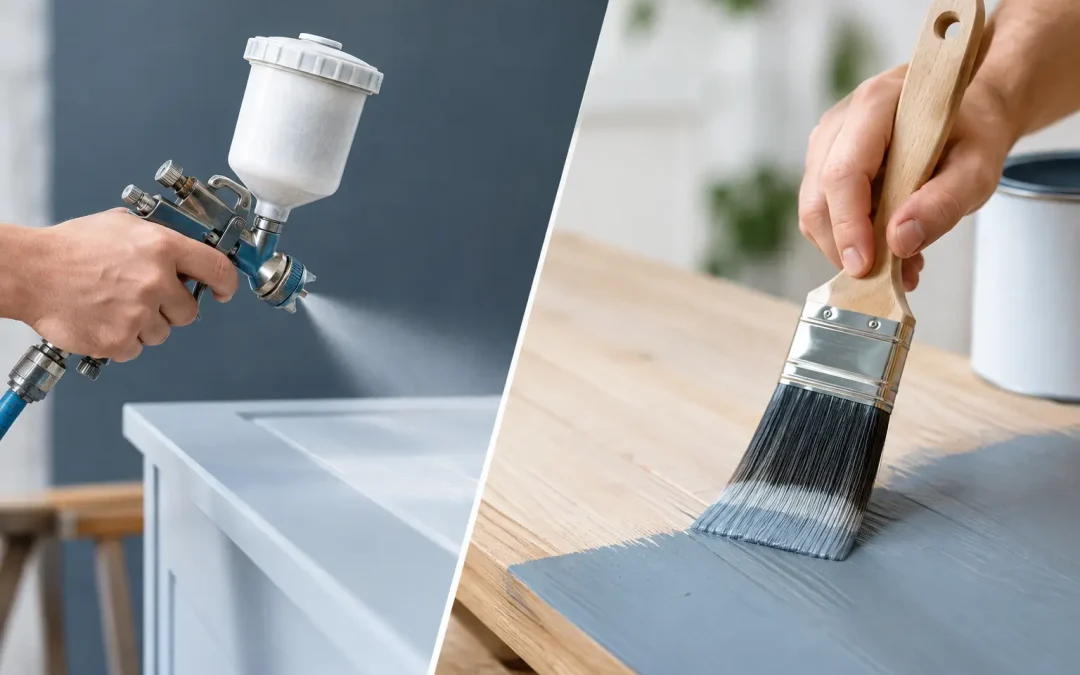
A freshly painted door can look completely different depending on how the paint is applied. In the debate around spray painting versus brush painting, neither method is automatically better. The right choice depends on the surface, the condition of the room, the finish you expect and how much preparation the job requires.
For homeowners, landlords and business owners, the aim is usually the same: a clean, hard-wearing finish without weeks of disruption. Spray application can produce an exceptionally smooth result at speed, while brush painting remains the most practical and precise option for many areas. A professional decorator will often use both methods on the same project.
Spray Painting Versus Brush Painting: The Main Difference
Brush painting applies paint directly to a surface using a brush, and sometimes a small roller for larger flat areas. It is a familiar method, well suited to detailed work, awkward corners and smaller repairs. With good preparation and quality paint, a skilled decorator can achieve a smart, even finish that stands up well to everyday use.
Spray painting uses specialist equipment to atomise paint into a fine, controlled mist. This allows paint to settle evenly across broad, flat surfaces and detailed profiles without the brush marks that can show on certain finishes. It is particularly effective for doors, skirting boards, stair spindles, kitchen cabinets, fitted furniture and larger commercial areas.
The visible difference is often most noticeable on woodwork and cabinetry. A sprayed finish can give doors and cabinets a refined, factory-style appearance. That said, spraying is only as good as the preparation behind it. Dust, dents, loose paint and poor masking will still show through, whatever equipment is used.
When Spray Painting Is the Better Choice
Spraying is a strong option where there are multiple similar items to coat, particularly if a smooth finish and efficient turnaround are important. A run of internal doors, a full kitchen makeover or extensive skirting and architraves can all benefit from the method.
Smooth finishes on cabinets and woodwork
Kitchen cabinet painting is one of the clearest examples. Replacing a kitchen is expensive and disruptive, but professionally prepared and sprayed cabinet doors can make an older kitchen feel new again. The coating is applied evenly across flat panels, routed details and edges, helping to avoid the texture associated with a brush-applied finish.
The same applies to doors, window frames, radiators and fitted wardrobes. If the surfaces have been properly cleaned, sanded, primed where needed and repaired, spraying can leave a highly consistent finish with excellent coverage.
Faster application on larger projects
Spray equipment covers broad areas more quickly than a brush. This can be useful in empty properties, refurbishments, commercial units and projects with many doors or long runs of trim. Faster application does not mean rushed work. It means more time can be directed towards the steps that matter most: protecting the property, preparing surfaces and allowing coatings to cure properly.
For commercial premises, the speed advantage can help reduce interruption. Work can be planned around access requirements, trading hours and other contractors, rather than leaving a site half-finished for longer than necessary.
Consistency across repeated surfaces
Where a property has ten doors, several frames, matching skirting boards and built-in joinery, consistency matters. Spraying helps achieve the same sheen and coverage from one item to the next. It is also useful when a dark colour or durable enamel is being applied, as these finishes can show brush marks more readily if they are not laid off carefully.
Where Brush Painting Still Makes Sense
Brush painting has not been replaced by spraying. It remains a dependable method for controlled, detailed work and for projects where masking a whole area would take longer than the painting itself.
A brush is often the sensible choice for touch-ups, small repairs, narrow sections of trim and difficult corners. It also allows a decorator to work around occupied rooms with less set-up, which can be helpful when furniture cannot be moved or a business needs one area kept operational.
Exterior maintenance can also call for brush work. Timber windows, fences, gates and intricate joinery may have cracks, joints and weathered edges that need careful attention before paint is applied. Brushing paint into these areas can improve coverage and help protect vulnerable surfaces.
There is also a practical cost consideration. For one internal door or a small section of skirting, the time needed to mask floors, walls, furniture, sockets and adjacent surfaces for spraying may not be worthwhile. A brush can deliver an excellent result with less preparation around the immediate work area.
Preparation Matters More Than the Method
The best-looking paintwork is built on preparation, not on a shortcut. Before any topcoat is applied, surfaces need to be assessed properly. Flaking paint must be removed, holes and dents filled, rough areas sanded and dust cleared away. Grease, silicone residue and kitchen grime can prevent paint from bonding, while bare timber, stains and previously glossy surfaces may require the correct primer.
For spraying, protection is especially important. Floors, walls, appliances, worktops, glazing, fittings and nearby furniture must be masked carefully to prevent overspray. Good masking takes time, but it is what allows spraying to be clean and controlled rather than messy.
For brush painting, preparation is equally important. The decorator needs clean edges, the right brush for the coating and enough working time to lay the paint off smoothly. Cheap paint or unsuitable tools can leave drag marks, poor opacity and a finish that marks too easily.
Trade-grade materials also make a difference. The appropriate primer and topcoat must match the surface and its use. A kitchen cupboard, for example, needs a tougher coating than a rarely touched ceiling. An exterior window frame needs a system that can handle changing weather conditions.
Cost, Disruption and the Condition of the Property
It is reasonable to ask whether spraying costs more than brush painting. The answer depends on the job. Spraying requires specialist machinery, thorough masking and a controlled working area. On a small job, that additional set-up can make brush painting better value.
On a larger project with repeated surfaces, spraying can be more efficient and may offer better value overall. Fewer application hours across multiple doors or cabinets can offset the additional preparation. The quotation should account for the condition of the surfaces, repairs required, access, materials and the protection needed to keep the property clean.
Occupied homes need particular consideration. A full spray setup may be ideal when a room is empty or during a wider refurbishment. In a lived-in property, the work can still be carried out successfully, but careful planning is needed to minimise disruption. Sometimes the best answer is to remove doors for finishing, spray selected items in a prepared area and brush paint the remaining details in place.
Why Professionals Often Use Both Methods
The choice does not have to be spray or brush from start to finish. Many high-quality decorating projects use each method where it performs best. A decorator may spray doors, cabinets and long lengths of prepared woodwork, then use a brush to cut in, coat fine details and complete areas where spraying would be impractical.
This combined approach protects the quality of the finish while keeping the work efficient. It also avoids treating every room in the same way. A compact bedroom with one painted door needs a different plan from an empty house with twenty doors, or an office refurbishment that must stay tidy and accessible.
At RS Interiors MK, the method is chosen around the project rather than the equipment. Advanced spray application can create a flawless finish with minimal disruption where it is suitable, while careful brush work remains essential for detail, control and lasting protection.
If you are planning a kitchen refresh, repainting tired woodwork or preparing a property for new tenants, start by looking at the surfaces rather than choosing a method first. A clear assessment and a free, no-obligation quote will show which approach will give your property the finish it deserves.
Recent Comments