
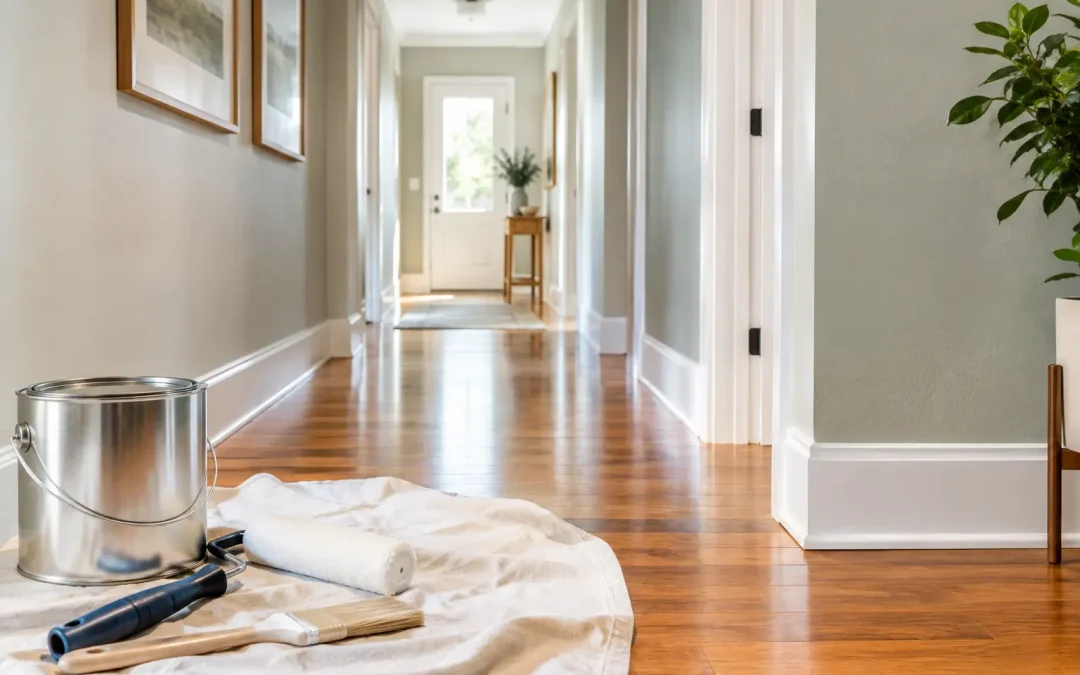
A hallway can look tired long before the rest of the house. It takes the daily rush of shoes, bags, pets, prams and fingertips, often with little natural light to disguise scuffs. Choosing the best durable paints for hallways is therefore about more than finding a colour you like. The right paint must be washable, hard-wearing and suitable for the surface beneath it, while still giving the finish you want.
For many homes, a premium washable matt emulsion is the best starting point. It gives walls a modern, low-sheen appearance but stands up far better to regular cleaning than traditional contract matt. However, halls vary. A busy family entrance, a narrow stairwell and a communal corridor all place different demands on the paintwork.
What makes hallway paint durable?
Durability is not simply about buying the most expensive tin on the shelf. A paint finish needs to resist marking, tolerate gentle cleaning and hold its colour without becoming patchy or polished where it is wiped. It also needs to adhere properly. Even an excellent product will struggle on dusty plaster, loose old paintwork or walls affected by damp.
For hallway walls, look for paints described as washable, scrubbable or stain resistant. These terms are not identical, but they generally indicate a tougher paint film than standard matt emulsion. A good quality washable paint allows everyday marks to be removed with a soft cloth and mild soapy water, without lifting colour or leaving a shiny rubbed patch behind.
Sheen level matters too. Paints with more sheen are usually tougher, but they reflect more light and show surface imperfections more clearly. This is why a practical choice is often a durable matt or soft-sheen paint for walls, with a harder eggshell or satin finish reserved for woodwork.
The best durable paints for hallways by finish
There is no single best product for every property. The most suitable finish depends on traffic levels, the condition of the walls and the look you want to achieve.
Washable matt for most hallway walls
Washable matt is the most popular choice for modern hallways. It has a calm, understated appearance and is particularly effective in living spaces where a glossy wall would feel out of place. Better-quality versions are designed to resist fingerprints, muddy splashes and light scuffs, making them a sensible option for family homes and rental properties.
The trade-off is that not all washable matts perform equally. Budget options can still mark easily, while some very tough formulations have a slightly richer sheen than a true flat matt. Choosing a reputable trade-grade product usually pays off in coverage, consistency and the number of years the finish remains presentable.
Soft sheen where regular cleaning is expected
Soft sheen gives a subtle reflective finish and is naturally more wipeable than matt. It works well in high-contact areas, especially near front doors, on stairway walls and in narrower halls where people regularly brush past.
Its weakness is preparation. Light catches every bump, filler edge and roller mark more readily on a sheen finish. If the wall is uneven or has been patched several times, careful filling, sanding and priming are essential. In some older homes, a durable matt will provide a smarter overall result because it is more forgiving.
Eggshell for woodwork and high-wear details
Door frames, skirting boards, handrails and internal doors take a different kind of punishment. They need paint that can cope with knocks, cleaning and repeated handling. Water-based eggshell is a strong choice for these surfaces, providing a low-to-mid sheen that is hard-wearing without looking overly shiny.
Satinwood is another practical option, particularly for busy entrances and commercial settings. It has a slightly more noticeable sheen than eggshell and is easy to clean, though it will show poor preparation more clearly. A well-prepared satin finish can look crisp and durable for years.
Acrylic eggshell for walls that need extra protection
In particularly hard-worked areas, such as the wall beside a coat rack or a shared entrance hallway, acrylic eggshell can be worth considering. It is tougher and more moisture-resistant than emulsion, but its sheen makes it less suitable for every wall. It is often best used selectively rather than throughout a home, unless the walls are exceptionally smooth.
Choose the paint around how the hallway is used
A freshly decorated hallway should suit the people using it. For a household with children or dogs, washable matt on the walls and eggshell on the woodwork is often the right balance of appearance and practicality. A landlord preparing a property between tenancies may prioritise a durable, easy-to-touch-up finish in a neutral shade. For an office or communal area, a tougher coating with reliable washability may be the more cost-effective choice over time.
Colour also affects how well a hallway wears. Very pale colours can make compact spaces feel brighter, but they reveal dirt more quickly around switches, bannisters and doorways. Very dark colours hide some marks but can show dust, chips and pale scuffs. Mid-toned neutrals, muted greens, warm greys and soft stone shades are often easier to live with while still giving the space character.
If you are using a deep or strong colour, do not cut corners on the base coat. Rich colours may need a suitable tinted undercoat or an additional coat for an even finish. This is especially relevant when covering a dark existing wall with a lighter shade, or vice versa.
Preparation is what keeps the finish looking smart
The paint is only part of the job. Hallways commonly have old picture-hook holes, dents from furniture, cracked corners and greasy marks around light switches. These need attention before the first coat goes on.
A professional preparation process starts with checking the surface for loose or flaking paint, stains, damp and movement cracks. Walls are then cleaned where needed, filled, sanded and dusted thoroughly. Bare filler, exposed plaster and stained areas may require a suitable primer or stain block before painting. Skipping these steps can lead to flashing, poor adhesion and marks that show through a new finish.
Cutting in also deserves care. Crisp lines around architraves, ceilings and sockets make even a simple neutral hallway look properly finished. On larger or heavily refurbished properties, spray application can provide a smooth, even coat efficiently, but surrounding surfaces must be carefully masked and protected first.
Cleaning durable hallway paint without damaging it
Even washable paint has limits. Let newly painted walls cure fully before cleaning them, following the product guidance, as paint can feel dry long before it reaches its full hardness. When a mark appears, start gently with a clean microfibre cloth and warm water. For stubborn grime, use a small amount of mild detergent rather than an abrasive cleaner.
Avoid hard scrubbing pads, bleach and strong degreasers. These can dull the finish or remove the paint film altogether. It is also better to deal with marks early, particularly on pale colours, rather than letting them build up over months.
Keep a labelled tin of leftover paint for small repairs. Store it somewhere dry and frost-free, and stir it thoroughly before use. A touch-up can be almost invisible when carried out soon after decorating, but on older walls with faded paint it may be better to repaint from corner to corner.
When professional decorating makes sense
A hallway has many awkward edges, doors, stairs and high-traffic details, so it can take longer than expected to decorate well. If the walls need significant repair, the woodwork has layers of old paint, or you want a flawless finish with minimal disruption, professional preparation is often the sensible route.
RS Interiors MK uses trade-grade materials and detailed preparation to create finishes that are designed for everyday life, not just handover day. For homeowners and property managers in and around Milton Keynes, a clear quotation also makes it easier to plan the work around your budget and schedule.
The best choice is usually a durable washable matt for most walls, paired with a tougher eggshell or satin finish on woodwork. Choose the sheen to suit the condition of the surfaces, prepare thoroughly, and your hallway can stay welcoming long after the paint has dried.
Recent Comments