
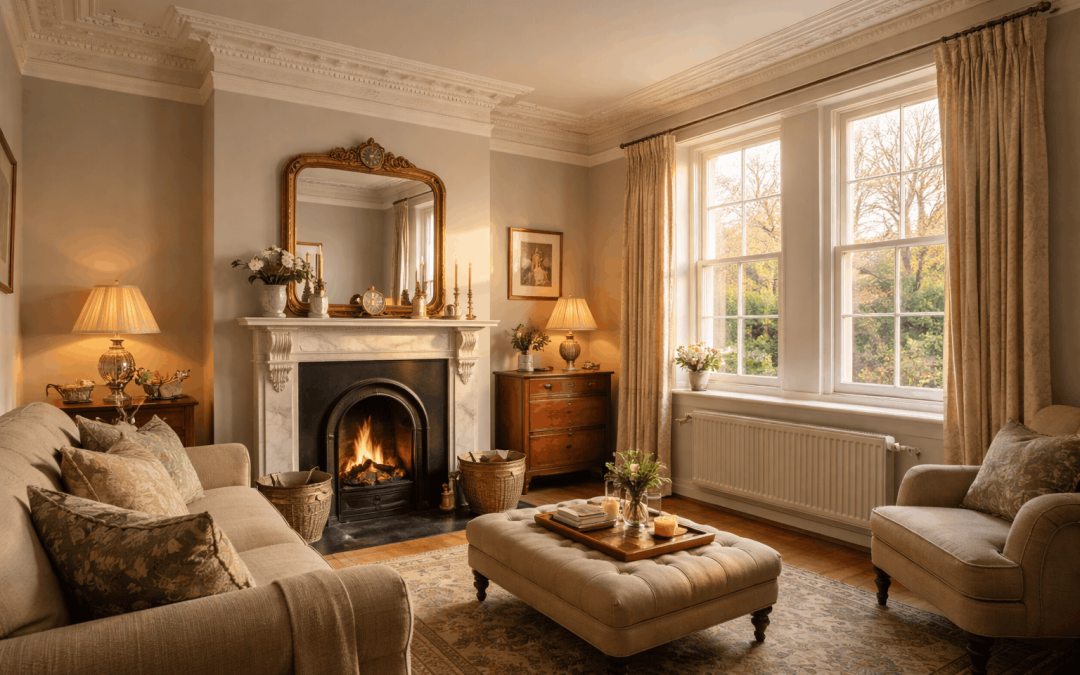
Period properties require a different decorating approach to modern homes. The wrong paint, the wrong sheen level, or the wrong preparation method can strip a Bletchley cottage or Stony Stratford townhouse of the character that makes it special. Decorating a period property without losing its character comes down to three principles: choosing breathable, historically sympathetic materials; working with the existing architectural detail rather than against it; and using a decorator with genuine experience of older buildings. RS Interiors MK has worked across period homes throughout Milton Keynes and Buckinghamshire, from Victorian terraces in Bletchley to Georgian townhouses in Stony Stratford.
How Do You Decorate a Period Property Without Losing Its Character?
The answer lies in material selection, surface preparation, and colour sensitivity. Period homes — typically those built before 1950 — have walls, woodwork, and substrates that behave very differently from modern plasterboard and MDF. Using modern, high-sheen paints on old lime plaster, or stripping original features without proper care, can permanently damage the fabric of the building and destroy the aesthetic that gives it value.
Understanding the Character of Period Homes in Milton Keynes
The Milton Keynes area encompasses a wide variety of period property types, each with distinct architectural character and decorating challenges.
|
Property Type |
Common Locations in MK |
Key Decorating Considerations |
|
Victorian Terraced Cottages |
Bletchley, New Bradwell |
Breathable paints on lime plaster, original woodwork preservation, deep authentic colours |
|
Edwardian Townhouses |
Stony Stratford, Newport Pagnell |
High ceilings, decorative cornicing, dado rails, warm neutral palettes |
|
1930s Semi-Detached |
Wolverton, Fenny Stratford |
Mixed substrates (plaster + early gypsum), original tiled fireplaces, warm creams and terracottas |
|
Georgian Properties |
Stony Stratford High Street |
Symmetry, muted heritage tones, sash windows requiring careful painting, limewash finishes |
|
Pre-war Farmhouses |
Rural Buckinghamshire |
Exposed stone or brick, lime render, natural pigment colours, minimal surface sheen |
Choosing the Right Paint for Period Walls and Plasterwork
One of the most common and costly mistakes made when decorating period homes is using modern vinyl emulsions on original lime plaster. Modern paints are vapour-impermeable — they trap moisture within the wall, which leads to condensation, mould growth, and in severe cases, structural damage to the plaster itself.
Breathable Paints for Lime Plaster
For Victorian, Edwardian, and Georgian properties with original lime plaster walls, RS Interiors MK recommends mineral silicate paints or clay-based emulsions. These allow the wall to breathe — moisture moves through the paint film rather than building up behind it. Brands such as Keim, Earthborn, and Little Greene offer excellent breathable options.
Traditional Oil-Based Paints for Woodwork
Original skirting boards, architraves, dado rails, and window frames in period homes are often solid wood — and solid wood moves with changes in temperature and humidity. A hard, modern water-based gloss can crack as the wood expands and contracts. Traditional oil-based eggshell or soft-sheen finishes flex with the timber, maintaining an intact film for longer and providing a period-appropriate appearance.
Colour Palettes for Period Properties in Buckinghamshire
Colour selection is perhaps the most visible element of period property decorating. The right palette celebrates the architecture; the wrong one looks incongruous and can actually reduce property value.
|
Period / Style |
Recommended Palette Approach |
|
Victorian (1837–1901) |
Rich, saturated tones – deep greens, burgundy, Prussian blue, warm ochres for feature walls |
|
Edwardian (1901–1910) |
Lighter, airier palette – soft duck egg, pale olive, warm stone, cream woodwork |
|
1930s Art Deco influenced |
Warm creams, sage green, dusky pink, terracotta accents with off-white woodwork |
|
Georgian (pre-1837) |
Muted, historical tones – Dead Salmon, Elephant’s Breath, Archive, Parchment with white/off-white woodwork |
|
Rural / Farmhouse |
Natural pigment colours – limestone, clay, willow, field grey, warm whites |
Preparing Period Surfaces for Decoration
Surface preparation on period properties demands patience and skill that goes beyond standard modern decorating practice. RS Interiors MK takes a systematic approach to period surface preparation.
- Assess existing plaster — identify any areas of blown, damp, or damaged plaster before painting
- Test for lead paint — properties built before 1970 may have lead-based paint on woodwork; safe removal protocol is essential
- Clean and degrease — cornices, dado rails, and woodwork accumulate decades of grime and multiple paint layers
- Fill and stabilise — hairline cracks in old plaster are filled with flexible filler; larger areas are stabilised with bonding agents
- Sand carefully — over-sanding original mouldings or woodwork removes fine detail that cannot be replaced
- Prime correctly — use a suitable primer for the substrate, not a generic modern undercoat
Preserving and Restoring Original Features
Period homes often contain original features that add significant character and value: ceiling roses, coving, dado rails, picture rails, sash windows, and decorative door furniture. RS Interiors MK’s approach is always to preserve and restore wherever possible, rather than replace or paint over.
Heavily built-up paint on cornicing and ceiling roses can be carefully stripped using specialist techniques, revealing the original sharpness and detail beneath. Sash windows receive particular attention — each sash is assessed individually, with swollen or sticking components addressed before painting to ensure long-term functionality.
Exterior Decorating for Period Properties in MK
The exterior of a period property presents its own challenges. Repointing, render, and external woodwork all require materials and methods that are compatible with an older building’s construction. RS Interiors MK’s exterior painting service is tailored to period homes, using flexible, breathable masonry paints and specialist timber treatments that protect without trapping moisture.
Why Local Knowledge Matters for Period Property Decorating in Milton Keynes
Milton Keynes is unique in that it contains some of the oldest towns in Buckinghamshire — Stony Stratford, Newport Pagnell, and Bletchley — alongside modern grid squares built from the 1970s onwards. Understanding the specific stock of period housing in this area, including the substrates, the common construction methods, and the local planning considerations for listed or conservation-area properties, is knowledge that only comes from experience working here.
RS Interiors MK has built that experience across hundreds of projects throughout MK, Buckinghamshire, and Bedfordshire. If you own a period property and want decorating work done properly — with materials and methods appropriate to the building — we’d be delighted to help.
Frequently Asked Questions — Period Property Decorating MK
Q: Do you need special paint for old plaster walls?
A: Yes. Original lime plaster walls in Victorian, Edwardian, and Georgian properties need breathable, vapour-permeable paints such as mineral silicate or clay-based emulsions. Standard vinyl emulsion can trap moisture behind the surface, leading to damp problems and plaster damage.
Q: Can you paint over lead paint in a period property?
A: In many cases, yes — encapsulation is often safer than full removal. However, any sanding or disturbing of lead paint must follow safe working procedures. RS Interiors MK follows current Health & Safety Executive guidelines for working with lead paint in domestic properties.
Q: How do you paint sash windows without them sticking?
A: Sash windows must be cleaned, lightly sanded, and painted with care to avoid painting the runners, weights, or sealing the sashes shut. RS Interiors MK applies thin, even coats and ensures each sash is left in the correct position to cure without contact with the frame.
Q: What colours work best for a Victorian terrace in Bletchley?
A: Victorian properties typically suit rich, deep tones in living spaces — Forest green, navy, deep teal, warm burgundy — paired with warm off-whites on woodwork and cornicing. For a lighter feel, soft terracotta or warm sage with cream woodwork works beautifully.
Q: Do you work on listed buildings or conservation area properties in MK?
A: Yes. RS Interiors MK has experience working on properties within conservation areas across Milton Keynes and Buckinghamshire. For listed buildings, we recommend confirming any external colour changes with the local authority before commencing work
Recent Comments