
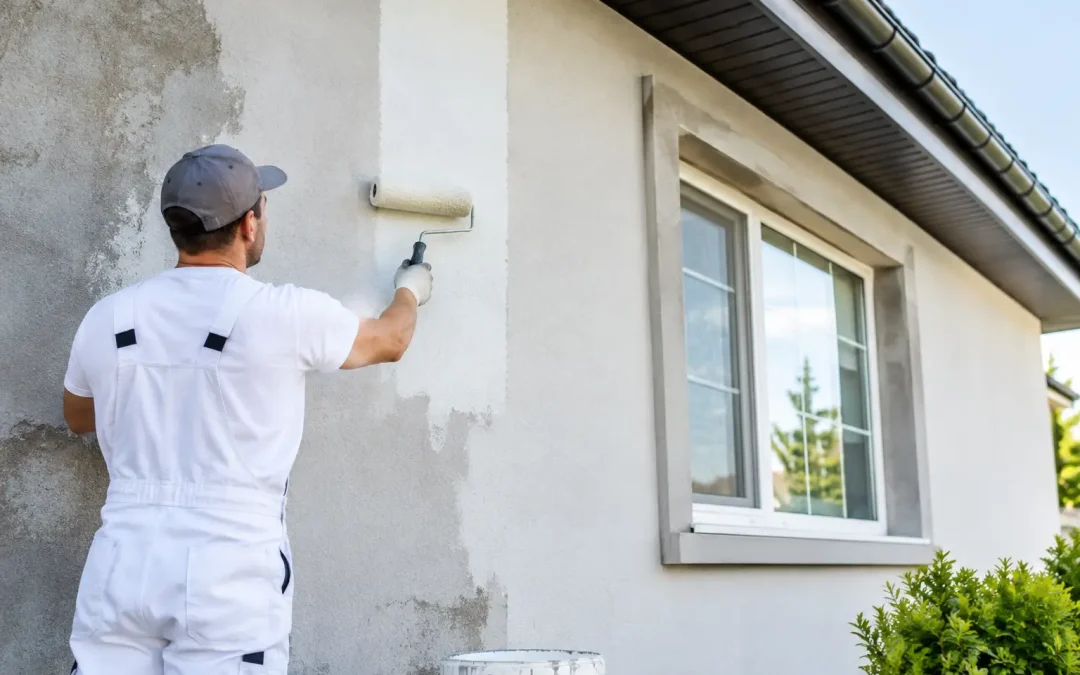
A tired exterior rarely announces itself all at once. It starts with a little fading on the sunny side, a hairline crack near a window, or paint that feels chalky when you brush a hand across it. Knowing when to repaint exterior walls helps you deal with those early signs before damp, timber decay or costly repairs take hold.
For many homes, repainting is both protection and presentation. A properly prepared, professionally painted exterior keeps rain away from vulnerable surfaces and makes the property look cared for from the kerb. The right timing depends on the surface, previous paintwork, exposure to weather and the condition underneath – not simply how many years have passed since the last coat.
1. The paint is peeling, flaking or blistering
Peeling paint is one of the clearest signs that exterior walls need attention. It often begins around window frames, doors, gutters and lower wall areas where moisture sits for longer. Blisters can appear when water has found its way behind the paint film, while flaking may mean the coating has reached the end of its useful life.
Painting straight over loose material will not solve the problem. The failed paint must be removed, the surface allowed to dry, and the cause of moisture checked before priming and repainting. If there is a leaking gutter, cracked render or failed sealant around a window, that repair should come first. A quality paint system can only perform as well as the surface beneath it.
2. The colour has faded or looks patchy
Strong daylight gradually breaks down exterior paint, especially on south-facing and west-facing walls. Deep colours and exposed elevations can fade faster than sheltered parts of the property, leaving an uneven appearance even where the paint remains intact.
Fading alone is usually a cosmetic reason to repaint, but it is still worth acting before the coating becomes thin and weak. If the finish looks dull, patchy or noticeably different from one side of the house to another, fresh paint can restore a clean, consistent appearance. Trade-grade exterior paints offer better colour retention than cheaper alternatives, which matters on open sites and properties with little shade.
3. A chalky residue comes off on your hand
Run a clean hand over a painted wall. If a powdery residue transfers to your palm, the paint may be chalking. This happens as older coatings weather and binders break down under sunlight and rain.
Mild chalking can sometimes be cleaned and stabilised with the correct preparation and primer. Heavy chalking often means the existing coating has deteriorated too far for a simple refresh. A decorator will assess whether washing, scraping, sanding and spot priming are enough, or whether more extensive preparation is needed to achieve a durable result.
4. Cracks are appearing in render or masonry
Not every crack means an urgent structural problem, but they should never be ignored before exterior painting. Fine hairline cracks in render are common and may be repaired as part of the preparation work. Wider, recurring or stepped cracks in brickwork can point to movement and may require further investigation before decoration begins.
Painting over cracks without repairing them leaves a weak point for rainwater to enter. During colder weather, trapped water can freeze and expand, making the damage worse. The best approach is to clean out suitable cracks, fill them with an appropriate exterior repair material, allow sufficient drying time and then apply a compatible primer and paint.
5. Damp marks, mould or green growth are returning
North-facing walls, shaded areas and surfaces below overflowing gutters can develop algae, moss and mould. Apart from looking neglected, this growth holds moisture against the wall and interferes with paint adhesion. Dark damp patches may also reveal issues with rainwater goods, pointing, render or ventilation.
The wall needs to be treated and cleaned properly, not just painted over. Once dry, it can be inspected for the source of the moisture and prepared for repainting. Where the underlying issue is resolved, a suitable exterior coating gives the wall a cleaner finish that is easier to maintain.
6. The previous paint job was poorly prepared
Sometimes a property needs repainting earlier than expected because the last job did not include enough preparation. Common clues include visible brush marks, paint on brick edges and windows, uneven sheen, peeling in isolated areas, or a new coat lifting the old one below it.
Exterior work is not simply a matter of applying more paint. Surfaces need cleaning, loose coatings need removing, damaged areas need repairing, and bare or porous sections need the right primer. Careful masking and protection also make a real difference to the final appearance, particularly around doors, windows, paving and planting.
7. You are preparing to sell, let or refurbish the property
A fresh exterior can make a meaningful difference when a property is going on the market, being prepared for new tenants or undergoing wider refurbishment. Buyers and tenants notice the approach to a property before they see the kitchen or living room. Faded render, neglected timber and peeling paint can suggest maintenance has been overlooked, even if the rest of the home is in good condition.
This does not always mean every external surface needs a full repaint. A targeted project may be enough: refreshing front elevations, repairing and painting window frames, smartening doors or restoring garden walls. The most suitable scope depends on the condition of the property, budget and the impression you need it to make.
When to repaint exterior walls for the best result
In the UK, late spring through early autumn is generally the best period for exterior decorating. The surface needs to be dry, temperatures need to be within the paint manufacturer’s recommended range, and there must be enough time for each coat to dry before rain, heavy dew or a sharp drop in temperature.
That said, a dry weather forecast matters more than the month on the calendar. A warm day after several wet days may not be suitable if masonry is still holding moisture. Equally, very hot weather can cause paint to dry too quickly, making it harder to maintain an even finish. Professional decorators plan around the condition of the surface as well as the forecast, rather than relying on a fixed seasonal rule.
Avoid painting when rain is expected before the coating has dried, when the wall is wet to the touch, or during frosty conditions. Early morning work can also be difficult if condensation or dew is present. Patience at this stage prevents problems such as patchiness, poor adhesion and premature failure.
How often should exterior walls be repainted?
As a broad guide, painted render and masonry often need attention every five to ten years. Timber features may need repainting sooner, often every three to five years, because wood expands and contracts with changing weather. Sheltered elevations can last longer, while exposed walls, coastal properties and south-facing surfaces may require more frequent maintenance.
The paint type also affects the interval. High-quality masonry paint, suitable primers and thorough preparation can extend the life of the finish. However, no coating lasts indefinitely. Regular visual checks, especially after winter, make it easier to book work while it is still a straightforward repaint rather than a repair project.
Preparation is what makes an exterior paint job last
The visible coat is only one part of the work. Long-lasting exterior decoration usually involves washing down surfaces, removing loose paint, treating organic growth, repairing defects, filling cracks, sanding rough edges and priming exposed areas. Doors, windows, paving and nearby plants should be protected before painting starts.
For larger or awkward areas, spray application can provide a smooth, even finish efficiently, while brushes and rollers are still essential for detailed edges and areas needing close control. The method should suit the property, surface and access requirements rather than being chosen for speed alone.
If you are unsure whether your walls need a full repaint or a smaller repair, take a close look after the next dry spell. Catching problems early protects the building and keeps the work more manageable. For homeowners and property managers in Milton Keynes, RS Interiors MK can assess the condition of your exterior and provide a free, no-obligation quote for work planned around your property and the weather.
Recent Comments