
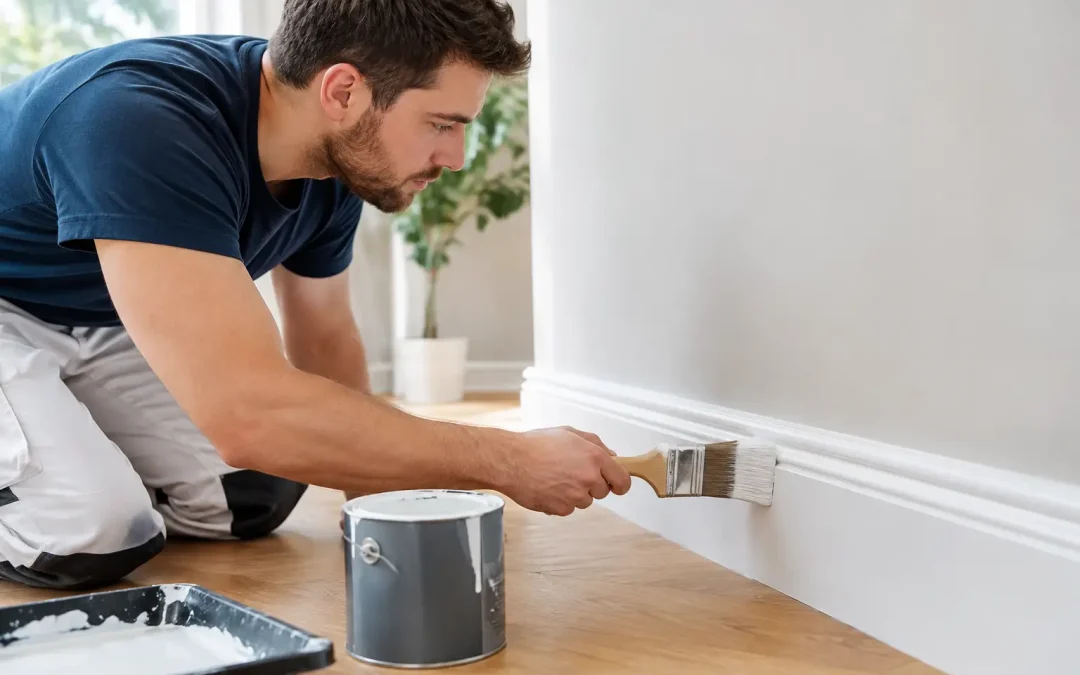
Freshly painted walls can still look unfinished when the skirting boards are scuffed, yellowed or marked with old brush lines. Professional skirting board painting Milton Keynes homeowners can rely on is less about simply applying a coat of white paint and more about careful preparation, suitable materials and the patience to get every edge clean.
Skirting boards sit at eye level when you enter a room and take more punishment than most painted surfaces. Shoes, vacuum cleaners, furniture, pets and everyday cleaning all leave their mark. A properly finished skirting board sharpens the whole room, frames the floor beautifully and gives newly decorated walls the crisp, complete look they deserve.
Why skirting boards need more than a quick repaint
It is tempting to paint skirting boards as the final task in a room refresh, using whatever paint is left over from a previous job. That can work for a short-term touch-up, but it often leads to uneven sheen, visible brush marks and paint that chips when the hoover catches an edge.
Older boards can present extra challenges. They may have layers of thick paint obscuring the profile, open joints where timber has moved, dents from furniture, silicone residue near flooring, or stains bleeding through an old finish. Before any top coat is applied, these issues need to be dealt with properly. Paint does not hide poor preparation for long.
The right approach also depends on the room. Hallways and living areas usually need a tougher finish because they receive regular contact. Bathrooms and utility spaces can need attention to ventilation and moisture. In rental properties, practicality and ease of future maintenance may matter more than creating a high-end decorative finish. A good decorating plan reflects how the property is actually used.
Skirting board painting in Milton Keynes: what a quality job involves
A clean, durable result starts with protecting the room. Floors, carpets and nearby surfaces should be covered carefully, particularly where boards meet a new floor finish or fitted carpet. There is little value in refreshing timberwork if the work leaves splashes on flooring or dust across the room.
Preparation creates the finish
The skirting is first cleaned to remove dust, grease and household residue. Any loose or flaking paint is sanded back, while dents, gaps and nail holes are filled with a suitable product. Caulk can be used where the board meets the wall, creating a neater line and preventing small shadow gaps from spoiling the final appearance.
Sanding is not only for removing defects. It gives the new coating a key, especially on previously painted gloss or satinwood surfaces. The area is then dusted thoroughly before priming any bare timber, filler or repaired sections. Skipping this stage is one of the main reasons paint later peels, flashes or dries unevenly.
Where old paint is heavily built up or failing, more extensive preparation may be the sensible option. This takes longer and costs more than a simple repaint, but it can restore the detail of the board and avoid repeating the same problem in a few months.
Choosing the right paint and sheen
Most modern interiors suit a water-based satinwood or eggshell finish on skirting boards. These paints dry faster, have lower odour and tend to keep their colour better than traditional oil-based gloss, which can yellow over time. A satin finish offers a subtle sheen and is a popular choice for busy homes because it looks smart without being overly reflective.
Gloss can still suit certain properties, particularly where a brighter, more traditional look is wanted. It does, however, show imperfections more readily and needs careful application. Matt wood paint gives a contemporary, understated finish, though it may be less forgiving in high-contact areas depending on the product chosen.
Colour is another consideration. White remains the familiar choice, but off-white, soft grey and colours matched to walls or doors can look equally effective. Dark skirting can create a striking contrast in a large, well-lit room, while a closely matched wall and woodwork colour can make a smaller space feel calmer and more continuous. The best choice is the one that works with the light, flooring and overall style of the room.
Applying paint without visible brush marks
Once the surface is ready, the paint must be applied evenly, with attention to the top edge, corners and awkward sections behind radiators. High-quality brushes, small rollers and trade-grade paints all make a difference. Thin, controlled coats generally give a better result than one heavy coat, which can sag, collect in mouldings or take longer to cure.
For larger refurbishment projects, spray application can provide an especially smooth, consistent finish on timberwork when the area is prepared and masked correctly. It is not always the right choice for a single occupied room, as protecting surrounding surfaces takes time. But for empty properties, multiple rooms or a full redecoration, it can be an efficient way to achieve a refined finish with minimal disruption.
Should skirting be painted before or after walls?
There is no single answer, but the usual order is to prepare and paint ceilings and walls first, then finish the skirting boards last. This allows the painter to cut a sharp line between wall and timberwork and prevents wall paint from landing on freshly finished boards.
If walls are being wallpapered, it is generally best to complete the wallpaper before the final coat on the skirting. The bottom edge of the paper can then be neatly finished at the board, and any minor marks can be addressed during the final timberwork stage.
The exception is a major refurbishment where skirting boards are being replaced, floors are changing or walls need repair behind the boards. In that case, the sequence should be planned around the wider project. Fitting new skirting after wall painting can mean touching up walls, while fitting it before final decorating gives the cleanest opportunity to fill and caulk every join.
Common problems that spoil otherwise good decorating
A yellow tint on white skirting is often associated with older oil-based paints, particularly in rooms with limited daylight. Peeling usually points to poor adhesion, dampness or painting over a contaminated surface. Cracks along the top edge may be caused by normal movement in the property and are often solved with flexible decorator’s caulk rather than repeated coats of paint.
Another common issue is painting straight over silicone sealant. Most paint will not adhere to it properly, leaving beads, gaps or areas where the coating pulls away. Silicone needs removing and replacing with a paintable alternative where appropriate.
Brush marks and rough finishes are also avoidable. They can result from low-quality paint, an unsuitable brush, overworking paint as it starts to dry, or failing to remove sanding dust. The remedy is not always another coat. Sometimes the surface needs to be flattened back and prepared again before repainting.
A practical choice for homes, rentals and business premises
For homeowners, repainting skirting boards is a cost-effective way to lift a tired room without changing the furniture or flooring. It is particularly worthwhile before putting a property on the market, after buying a home with dated woodwork, or when refreshing walls that make old trim stand out.
Landlords can benefit from a consistent, hard-wearing finish that helps a property look well maintained between tenancies. For offices, shops and other commercial spaces, tidy timberwork supports a professional appearance while helping protect surfaces exposed to regular footfall and cleaning.
RS Interiors MK provides detailed painting and decorating work across Milton Keynes and nearby areas, from a single room refresh to full property refurbishment. The focus is on thorough preparation, premium materials, tidy working practices and a finish that holds up to real life.
If your skirting boards are letting down an otherwise well-kept room, do not assume they need replacing. In many cases, sound preparation and careful painting can bring them back to a clean, durable standard and make the whole space feel properly finished.
Recent Comments