
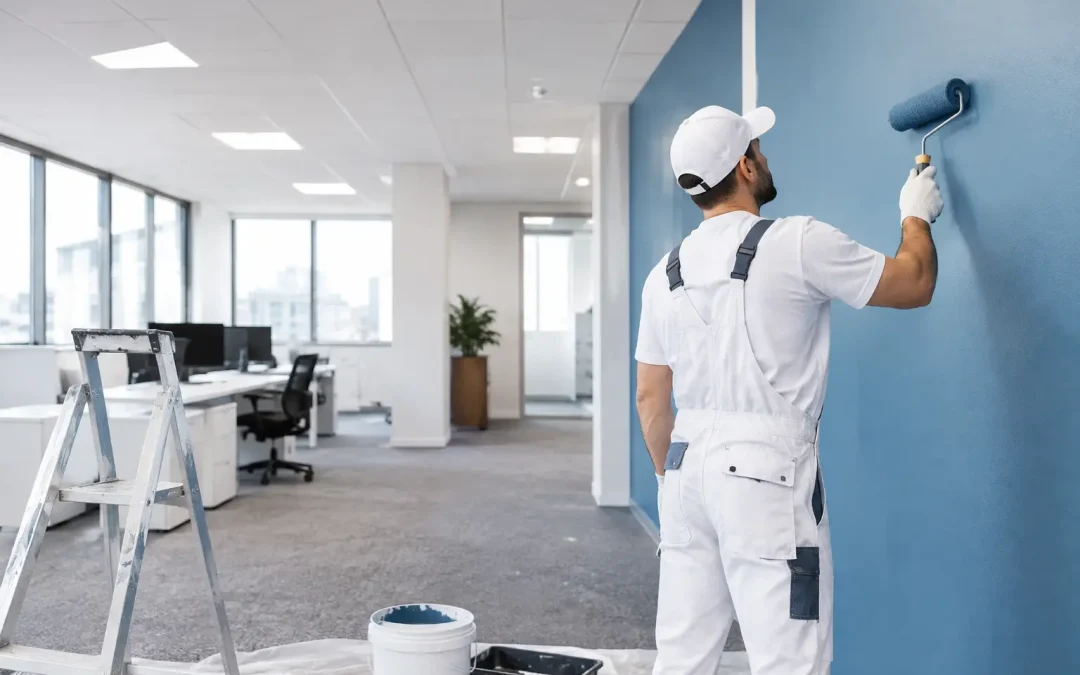
A tired office rarely announces itself with one major fault. More often, it shows in scuffed corridors, marked meeting-room walls, yellowing woodwork and a reception area that no longer reflects the business behind it. This office refurbishment painting case study shows how a planned decorating programme can change that without bringing normal working life to a halt.
The project below is a representative example of the kind of office refurbishment work carried out for local businesses. The aim was straightforward: create a brighter, more professional workplace, protect high-use surfaces and keep disruption to staff and visitors to a minimum.
The brief: a smarter office without a lengthy shutdown
The office had been in regular use for several years. The layout still worked, but the finish did not. Walls around desks and communal areas had accumulated marks, old picture fixings were visible, and skirting boards and door frames had taken the usual knocks from chairs, deliveries and everyday traffic.
The client did not want a dramatic redesign or unnecessary building work. They wanted the premises to feel clean, current and well cared for when staff arrived each morning and when visitors came through reception. Just as importantly, they needed the work organised around a working office rather than expecting the business to close for a week.
That shaped every decision. A quick coat of paint might have improved the appearance for a short time, but it would not have dealt with dents, failed filler, stained areas or worn timberwork. The right approach was a phased refurbishment with thorough preparation at the centre of it.
Planning around people, furniture and access
Before any decorating began, the rooms were assessed individually. High-traffic zones such as the entrance, corridor and kitchen needed tougher finishes than quiet offices. Meeting rooms needed a calm, presentable look, while workspaces needed colours that kept the rooms bright without creating glare on computer screens.
A neutral main wall colour was chosen to make the office feel more open, with a deeper accent colour used carefully in the reception and meeting areas. This gave the space some character without dating it or making future changes difficult. White ceilings and refreshed woodwork helped improve the available light, particularly in rooms with limited natural daylight.
The programme was arranged in stages. Where possible, staff moved between areas while painting took place, and furniture was grouped, covered and shifted carefully rather than removed from site altogether. No two offices operate in exactly the same way, so this is where flexibility matters. A small business may be able to complete the work over a weekend; a larger office may be better served by working room by room over several evenings and quieter days.
Clear access arrangements also prevent avoidable delays. Agreeing when contractors can enter, where materials can be stored and which areas must remain available makes a noticeable difference to both the pace of work and the experience for staff.
Office refurbishment painting case study: preparation first
The visible transformation came from paint, but the lasting result came from the work completed before the first finish coat was applied.
Furniture, flooring and fixed equipment were protected with clean dust sheets and coverings. Loose fittings were removed where practical, while sockets, switches and edges were masked carefully for crisp lines. Old hooks and redundant fixings were taken out, then holes, cracks and damaged corners were filled, sanded and checked under good light.
This stage often takes longer than clients expect, particularly in offices that have been reconfigured several times. A wall can look acceptable from across the room yet show every imperfection once fresh paint goes on. Skipping the preparation may save a few hours at the start, but it can leave a finish that looks patchy or worn far sooner than it should.
Stained or repaired areas were sealed where needed to prevent bleed-through. Previously painted surfaces were cleaned and rubbed down so the new coatings could bond properly. Doors, frames and skirting boards received particular attention, as these are the surfaces people touch and notice at close range.
Choosing materials for a working environment
Office decorating is not only about finding the right shade. The paint needs to suit the use of the room.
For the main walls, a durable, washable trade-grade finish was selected. This made sense in corridors, reception and shared spaces where fingerprints, bags and chair movement are unavoidable. A very flat finish can look attractive, but in a busy workplace it may mark more readily than a quality low-sheen alternative. The best choice depends on the surface condition, the amount of traffic and how often the area will be cleaned.
Ceilings were finished in a clean matt paint to reduce the appearance of minor imperfections and help distribute light evenly. Woodwork was prepared and coated for a smooth, hard-wearing finish that could cope with regular cleaning. Where suitable, spray application was used on selected surfaces to achieve an even result efficiently, while brush and roller work allowed detailed cutting-in and control around occupied areas.
Spraying is not automatically the answer for every office. It can provide a particularly smooth finish and help speed up larger clear spaces, but it requires careful masking and good containment. In a furnished or fully occupied office, traditional application may be the more practical option in some rooms. The method should follow the site conditions, not the other way around.
Keeping disruption under control
Minimal disruption does not mean rushing. It means organising the work properly, maintaining tidy working areas and communicating clearly about what is happening next.
At the end of each working period, equipment was stored safely, surfaces were left usable where agreed, and waste was removed or contained. The team kept dust to a minimum during sanding and avoided leaving open paint or strong smells in areas needed by staff. Low-odour products can be a sensible choice for occupied offices, although drying time, durability and the required finish must all be considered as part of the specification.
The client was kept updated as each section was completed. This allowed minor decisions, such as whether to retain a feature wall or refresh an additional door, to be dealt with before they became costly changes at the end of the job.
For office managers, this communication is as valuable as the painting itself. A decorating project should not create a daily guessing game about which room is available, where meetings can be held or whether staff can return to their desks.
The finished result and what made it work
Once the work was complete, the difference was immediate. The reception looked sharper and more welcoming, meeting rooms felt brighter, and the repaired walls gave the whole office a more consistent appearance. Freshly finished skirting boards, frames and doors made the rooms look properly refurbished rather than simply repainted.
The improvement also had a practical side. Washable wall finishes made routine maintenance easier, while well-prepared timberwork was better protected against the knocks of everyday use. A carefully selected neutral scheme gave the business a professional background for client meetings, staff photographs and future signage without tying it to a short-lived trend.
The key lesson from this office refurbishment painting case study is that a successful result is rarely about applying more paint. It is about surveying the space honestly, allowing time for preparation, choosing materials for the building’s real use and scheduling the work around the people who rely on it.
When is the right time to repaint an office?
Many businesses wait until the office looks noticeably poor before arranging decorating. That can mean more repairs, more disruption and a larger job than necessary. Repainting before wear becomes severe is often easier to manage, especially in high-use areas such as corridors, kitchens and reception spaces.
There are also natural opportunities to plan the work: a lease renewal, a change of branding, a departmental move, new furniture or a quieter period in the business calendar. If the office is being refurbished more widely, painting should be scheduled after the dustiest trades have finished but before final furniture is placed back. This reduces the risk of fresh surfaces being damaged and avoids having to work around unnecessary obstacles.
For businesses in Milton Keynes and the surrounding area, RS Interiors MK can assess the condition of an office, discuss practical colour and finish options, and provide a clear, no-obligation quotation. The most useful starting point is a simple one: identify the areas staff and visitors notice first, then plan a finish that will still look good after the working week has done its worst.
Recent Comments